Key Takeaways
- Atolls are ring-shaped coral formations that often encircle lagoons, whereas islands are landmasses that rise directly from the ocean surface.
- Geopolitically, atolls tend to have limited land area, impacting territorial claims, while islands can vary from tiny islets to large landmasses with complex governance.
- Atolls usually develop in warm tropical waters, and their structures are shaped by coral growth and subsidence, contrasting with islands which may be volcanic, continental, or sedimentary.
- Territorial sovereignty over atolls often involves disputes related to their strategic location and natural resources, similar to issues faced with island nations.
- Ecologically, atolls support unique marine life due to their lagoons, while islands provide habitats for terrestrial wildlife and diverse ecosystems.
What is Atoll?
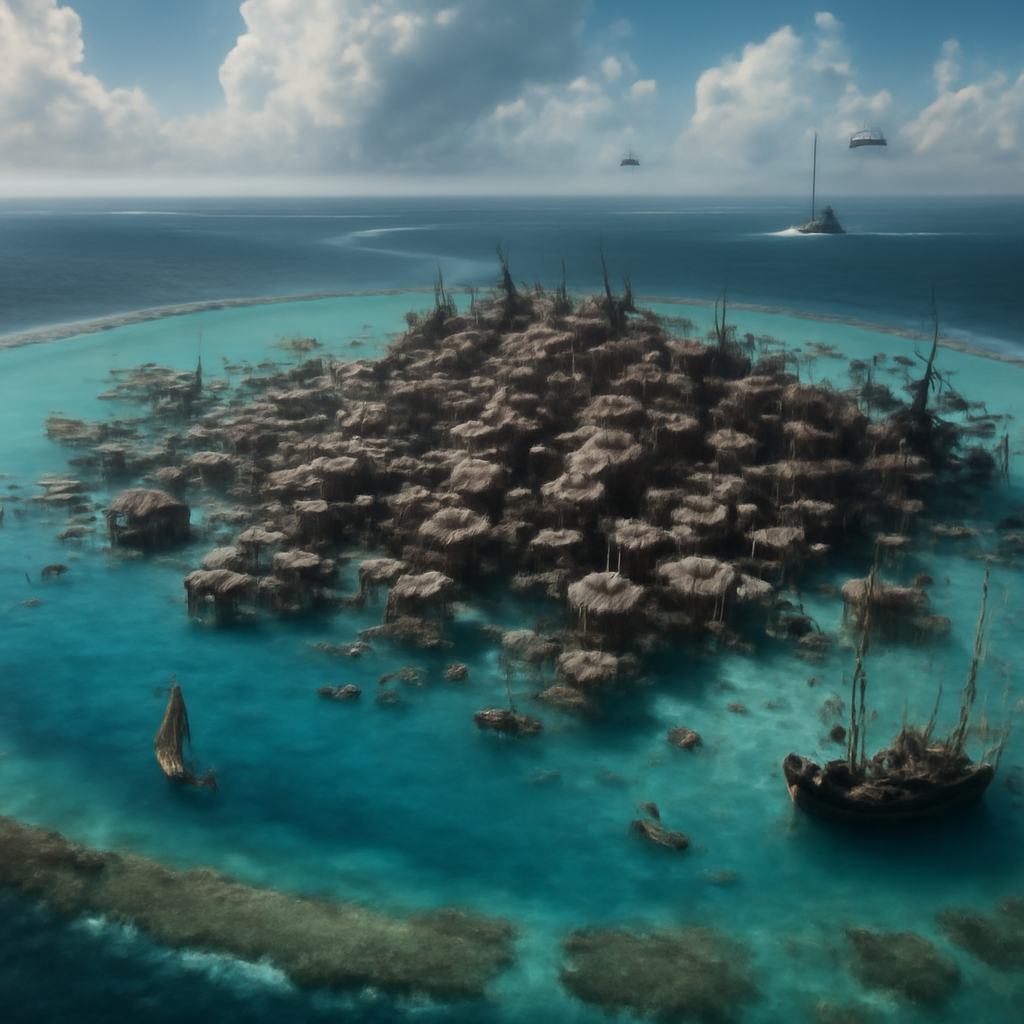
An atoll is a ring-shaped coral reef that encircles a lagoon, often found in warm tropical oceans. These formations emerge from the gradual buildup of coral colonies on submerged volcanic islands, which over time erode or sink, leaving behind the coral ring. Atolls are fascinating geostructures that symbolize the dynamic processes of reef development and island subsidence. They are usually composed of coral, limestone, and other calcium carbonate deposits, making them fragile yet resilient structures.
Formation and Geological Features
Atolls form over thousands of years through a complex process beginning with a volcanic island. Coral reefs grow around the island’s perimeter, gradually building upward and outward. As the volcanic island erodes and sinks, the coral continues to grow upward, maintaining its position near the sea surface. This process results in a ring-shaped reef with a central lagoon that can be several meters deep. The structure is often symmetrical, with coral islets sometimes forming on the reef’s rim. The geological stability of atolls depends on the rate of subsidence and coral growth, making them delicate indicators of oceanic and geological changes.
These formations are predominantly found in the Pacific and Indian Oceans, with the Maldives and Tuamotu Archipelago being prime examples. The coral reefs that comprise atolls are built by tiny invertebrates that extract calcium carbonate from seawater, creating massive reef structures. The lagoon within an atoll is usually shallow and rich in marine life, supporting vibrant ecosystems. The stability of an atoll’s structure is challenged by sea-level rise and climate change, which threaten their existence. The geological features also include coral pinnacles and small islets, which often serve as nesting sites for seabirds and marine turtles.
Ecology and Marine Biodiversity
Atolls host a diverse array of marine life, many of which are adapted to life within the lagoons or on the coral reefs. The lagoons act as nurseries for juvenile fish and provide shelter for crustaceans and mollusks. Coral reefs within atolls support a variety of coral species, which in turn attract larger predators such as sharks and groupers. The biodiversity is also reflected in the vibrant coral formations, sea turtles, and myriad of fish species that inhabit these environments. The ecological balance of atolls is sensitive, with coral bleaching and pollution posing serious threats. Conservation efforts are crucial to preserve these fragile habitats and their marine populations.
Islands associated with atolls, often called reef islands, tend to have limited terrestrial flora and fauna but are vital bird nesting sites. The lagoons attract specific species of fish and invertebrates, creating a complex food web. The coral reefs act as natural barriers, protecting the atoll from ocean waves and storms, which also influences the local ecology. The interconnectedness of coral health and marine biodiversity emphasizes the importance of maintaining water quality and reducing human impact. With climate change accelerating, the resilience of atolls’ ecosystems is under increasing pressure, prompting international focus on reef preservation.
Human Settlement and Use
Most atolls are sparsely inhabited due to their limited land area and challenging environment. When populations exist, they often rely on fishing, copra harvesting, and tourism. Small communities may live on coral islets or the rim of the atoll, utilizing the lagoon for fishing and transportation. Their settlements are usually vulnerable to sea-level rise and extreme weather events, forcing migration or relocation in some cases. Historically, atolls provided strategic locations for navigation and maritime trade routes, affecting regional geopolitics.
Tourism development on atolls often focuses on diving, snorkeling, and eco-tourism, capitalizing on the unique marine biodiversity. However, over-tourism can threaten the fragile coral ecosystems and local habitats. Resource extraction, such as salt or coral harvesting, has historically impacted atoll stability, leading to environmental concerns. In some regions, atolls serve as research sites for climate change studies, given their sensitivity to sea-level fluctuations, Despite their remote nature, atolls are increasingly recognized for their geopolitical significance, especially in territorial disputes over maritime boundaries,
Challenges and Conservation
Atolls face numerous environmental challenges, primarily driven by climate change and human activities. Rising sea levels threaten their very existence by submerging land and disrupting coral growth, Ocean acidification weakens coral skeletons, impairing reef development and resilience. Pollution from ships and nearby land masses introduces harmful substances that degrade water quality. Conservation programs focus on establishing marine protected areas, regulating fishing, and restoring damaged reefs.
Efforts to monitor atoll health include satellite imaging, underwater surveys, and community-led initiatives. International organizations work with local governments to implement sustainable practices and raise awareness about climate impacts. The fragility of atoll ecosystems makes them particularly vulnerable to natural disasters, such as cyclones and tsunamis, which can cause extensive damage. Recognizing their ecological and geopolitical importance, many countries are investing in research and protective measures to safeguard atolls for future generations.
What is Island?

An island is a landmass that rises from the ocean surface, surrounded by water, and can vary greatly in size and shape. Islands can be formed through volcanic activity, sediment accumulation, or continental uplift, making their origins diverse. These landforms are often inhabited or used for various purposes, including ecosystems, habitation, and strategic positioning. Unlike atolls, islands do not necessarily have a coral reef structure, though some do.
Geological Diversity and Formation
Islands originate from multiple geological processes, including volcanic eruptions, tectonic movements, and sediment deposition. Volcanic islands such as Hawaii and Iceland form when magma erupts through Earth’s crust, creating landmasses that can grow over time. Sedimentary islands, like the Bahamas, develop from accumulated sand and organic material, often on top of coral reefs or submerged platforms. Continental islands, such as Greenland, are parts of larger landmasses that have become isolated due to sea level changes or tectonic shifts.
Volcanic islands are often characterized by rugged terrain, high elevations, and active volcanic activity, which influences their ecosystems and human settlement patterns. Sedimentary islands tend to have flatter landscapes and are more prone to erosion. The geological stability of islands varies, with some being geologically active and others relatively stable. Tectonic activity can cause islands to rise or sink, affecting their size and shape over geological timescales. These formation processes lead to a wide array of physical features and ecological niches.
Ecology and Habitat Diversity
Islands support a broad spectrum of terrestrial and marine ecosystems, often hosting endemic species that evolved in isolation. Their habitats include forests, grasslands, wetlands, and coastal zones, each providing niches for unique flora and fauna. Islands serve as breeding grounds for seabirds, marine mammals, and insects, often with limited predators. The ecological dynamics are influenced by island size, climate, and human activity, which can lead to habitat loss or invasive species introduction.
Large islands like Madagascar are biodiversity hotspots, home to species not found elsewhere. Smaller islands may lack large terrestrial animals but provide critical nesting sites for turtles and seabirds. The surrounding waters typically host coral reefs, mangroves, and seagrass beds, supporting fisheries and marine biodiversity. Conservation efforts on islands focus on protecting endemic species and restoring habitats damaged by development or invasive species. Climate factors such as tropical storms and sea-level rise further shape their ecological resilience.
Human Inhabitation and Development
Many islands are inhabited, with communities relying on agriculture, fishing, and tourism. The degree of development varies, from remote, uninhabited atolls to densely populated urban islands. Infrastructure challenges include limited freshwater resources, vulnerable coastlines, and transportation constraints. Human activities have historically impacted island ecosystems through deforestation, overfishing, and pollution. Some islands, especially those with strategic importance, are heavily militarized or developed for tourism.
Islands have often been focal points for geopolitical disputes, especially in regions with rich natural resources or strategic location. Although incomplete. Sustainable development on islands is complicated by environmental sensitivities, requiring careful planning and management. Many island nations are actively engaged in climate change mitigation, recognizing their vulnerability to rising seas. As global sea levels rise, the future of many islands remains uncertain, prompting international collaborations to protect these unique landforms and their populations.
Environmental and Security Challenges
Islands face threats from climate change, including rising sea levels and increased storm intensity, which threaten land loss and ecosystem degradation. Coastal erosion and saltwater intrusion into freshwater supplies pose significant risks to human settlements. Managing natural resources sustainably is critical, especially for islands dependent on fishing and tourism. The geopolitical importance of islands can lead to conflicts over territorial waters and maritime boundaries.
Natural disasters like tsunamis can devastate island communities, emphasizing the need for resilient infrastructure and disaster preparedness. Invasive species introductions threaten native flora and fauna, often leading to extinctions. Environmental preservation efforts include creating marine protected areas, restoring native habitats, and enforcing sustainable fishing practices. Security concerns also arise from strategic positioning, with some islands hosting military bases or being contested zones, adding complexity to their geopolitical significance.
Comparison Table
Here is a detailed comparison of atoll and island based on key aspects:
| Parameter of Comparison | Atoll | Island |
|---|---|---|
| Formation process | Formed from coral growth around sinking volcanic islands | Formed through volcanic activity, sediment buildup, or tectonic uplift |
| Land area | Limited, often less than a few square kilometers | Varies from tiny islets to extensive landmasses |
| Core structure | Coral reef ring encircling a lagoon | Solid landmass, may be volcanic, sedimentary, or continental |
| Habitat types | Marine-focused, with lagoons supporting coral and fish | Terrestrial and marine habitats, supporting diverse ecosystems |
| Human habitation | Often sparsely inhabited or uninhabited, limited resources | Inhabited with varied development levels |
| Ecological importance | Supports unique marine biodiversity, nurseries for fish | Hosts endemic species, biodiversity hotspots |
| Structural stability | Dependent on coral growth and subsidence rates | Depends on geological stability, volcanic activity |
| Impact of climate change | Highly vulnerable to sea-level rise and bleaching | Threatened by rising seas, erosion, habitat loss |
Key Differences
Structural origin — Atolls are coral reef structures formed from the subsidence of volcanic islands, while islands originate from volcanic, sedimentary, or tectonic processes.
Landmass size — Atolls usually have small land areas, whereas islands can be vast and diverse in size.
Reef presence — Atolls have a distinctive coral reef ring with a lagoon, whereas many islands lack such reef structures.
Ecological focus — Atolls are primarily marine ecosystems, while islands support both terrestrial and marine life.
Settlement density — Human habitation is often sparse on atolls because of limited land and resources, whereas some islands have large populations.
Formation time — Atolls take thousands of years to develop, contrasting with the often faster formation of volcanic islands.
- Resource availability — Islands can have richer terrestrial resources, while atolls depend heavily on marine resources.
- Geopolitical significance — Both can be strategic, but islands often have larger landmass and infrastructure for defense and governance.
FAQs
How do atolls influence maritime navigation?
Atolls serve as navigational landmarks in many oceanic routes, aiding sailors in avoiding hazards and locating islands or reefs. Their visibility varies depending on weather and sea conditions, but historically, they were critical for navigation in the Pacific and Indian Oceans. Modern GPS technology now reduces reliance on physical landmarks, though atolls still mark important territorial boundaries. Their presence can also complicate marine traffic management, especially in busy shipping lanes.
Can atolls be used for large-scale agriculture or development?
Due to their limited land area and fragile ecosystems, atolls are generally unsuitable for extensive agriculture or large-scale development. The soil quality is often poor, and freshwater resources are scarce. Some small-scale farming or coconut cultivation exists, but environmental impacts are a concern. Most development focuses on tourism or conservation rather than industrial use, to preserve the ecological integrity of the reef structures.
Are there any significant differences in legal sovereignty between atolls and islands?
Legal sovereignty depends on geopolitical agreements and historical claims rather than physical characteristics alone. Atolls are often part of larger island nations or territories, with sovereignty recognized through treaties or international law. Islands generally have clearer boundaries and larger land areas, making them easier to govern. Disputes over atolls often involve strategic or resource-related considerations, sometimes leading to territorial conflicts.
How does climate change specifically threaten the future of atolls and islands?
Both atolls and islands are vulnerable to sea-level rise, which can submerge land and erode coastlines. Warmer ocean temperatures cause coral bleaching, damaging reef structures that are vital for atoll stability and marine biodiversity. Increased storm intensity can lead to catastrophic damage, especially for low-lying areas. Adaptation strategies like seawalls or relocation are complicated by environmental and economic constraints, making their future uncertain without global climate action.
